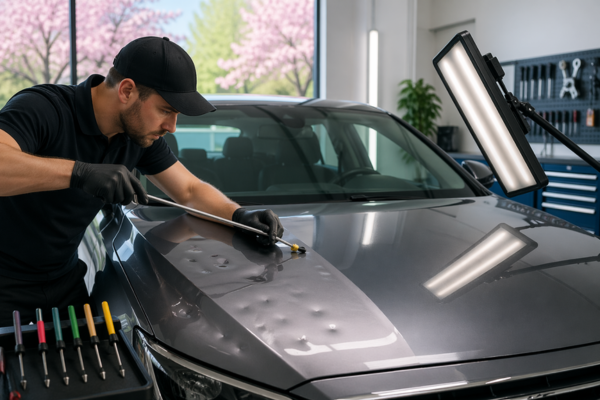
Paintless Dent Repair for Spring Hail Dents
Highlight Summary: Paintless Dent Repair for Hail is often the fastest way to remove spring hail dents while preserving your factory finish. In this guide, you’ll learn how PDR works, what makes a vehicle a good candidate, how to document hail damage for insurance, and what to do next if you want a clean, low-hassle repair.
Paintless Dent Repair for Hail is a smart option when hail leaves dents but the paint stays intact. Instead of sanding, filling, and repainting, a skilled technician reshapes the metal from behind the panel. That approach protects the original finish and often reduces repair time. It can also keep repair costs more predictable, especially when hail hits large flat areas like the hood, roof, and trunk.
If you want to explore options or get on the schedule quickly, start with the paintless dent repair page. You can also review related repair solutions on the Services page or request an estimate through the Contact page.
How paintless dent repair fixes hail dents
PDR uses specialized tools to apply controlled pressure behind the dent. The technician slowly massages the panel back into shape. This work takes precision and patience. The goal is to restore the metal’s original contour without disturbing the paint.
Hail dents are often ideal for PDR. Many dents are shallow and spread across larger areas. When the paint remains flexible and unbroken, PDR can deliver a smooth result that looks factory-correct. That matters for appearance and resale value.
When Paintless Dent Repair for Hail is the best fit
Not every dent qualifies for PDR. An inspection helps confirm what’s possible. In general, PDR works best when the metal has not stretched too far and the paint has not cracked.
Here are signs your hail damage may be a strong match for PDR:
- The paint surface is not chipped or cracked.
- Dents are shallow, even if there are many of them.
- The dents are on accessible panels like the hood, roof, or trunk.
- The panel edges and sharp body lines are not heavily impacted.
Some hail events create deeper dents or hit body lines hard. In those cases, PDR may still help. It can reduce dent depth before conventional repair. That can lower the overall repair scope.
What to do right after a hailstorm

After a hailstorm, it’s easy to focus on the obvious dents. Take a few steps that protect your claim and your vehicle’s condition.
- Photograph the hood, roof, and trunk in bright daylight.
- Take wide photos and close-ups from multiple angles.
- Check for paint chips that could lead to rust.
- Look at trim pieces, mirrors, and moldings for cracks.
- Schedule an inspection before repair shops fill up.
Hail claims often spike after major storms. Getting an estimate early helps you document damage and reserve a spot. If you want to start the process now, use the Contact page.
Insurance and hail dents: keep it simple

Hail damage is commonly covered under comprehensive insurance. Your deductible and policy details matter. However, the documentation steps stay the same. Clear photos and prompt inspection usually make the process smoother.
If you want a reputable, non-local reference on auto repair decisions and consumer basics, the Federal Trade Commission provides a helpful overview:
FTC Auto Repair Basics.
When you choose a shop, look for clear communication and a repair plan you understand. A good team explains what qualifies for PDR and what does not. They also outline timeline expectations, especially if parts or supplemental steps become necessary.
5-Star Review (Brielle): “If I could rate this place a 10 I would! These guys are so beyond respectful, super thorough, they explained everything to me, and never once made me feel stupid for asking question. Not only did they do such an amazing job, my car took just a few days longer than they anticipated for (solely due to a part taking a bit to arrive) and they went out of their way to clean the interior of my car, making it look brand new. They kept me updated throughout the process as well and let me know what was done and what still needed to be done. They are great people and a great company!!”
FAQ: Paintless Dent Repair for Hail

Can paintless dent repair remove hail dents completely?
Often, yes. Results depend on dent depth, location, and paint condition. Many hail dents repair to a like-new appearance.
Does PDR work if my paint is chipped?
PDR is best when paint is intact. If paint is chipped or cracked, your repair plan may include refinishing for long-term protection.
How long does paintless dent repair for hail take?
Timing depends on dent count and panel access. Some vehicles need a few days. Heavier hail events can take longer.
Is PDR cheaper than traditional body repair for hail?
It often is. PDR avoids repainting and filler work in many cases, which can reduce materials and labor time.
Will insurance cover paintless dent repair for hail dents?
Many comprehensive policies cover hail damage. Your deductible and coverage terms decide what you pay out of pocket.
Should I wait to repair hail dents until later in the year?
Waiting can delay scheduling and may allow paint damage to worsen. Early inspection is the safer choice, especially if you see chips.
Get your vehicle back to smooth, clean, and storm-ready
Spring hail dents can be frustrating, but they don’t have to linger. If you want a fast, factory-finish-friendly repair, start with paintless dent repair, then review options on the Services page. When you’re ready, reach out through the Contact page to schedule an inspection and get a clear plan.

Publish Date: May 2026


